Golden Retrievers as Service Dogs: Why They Excel & How It Works
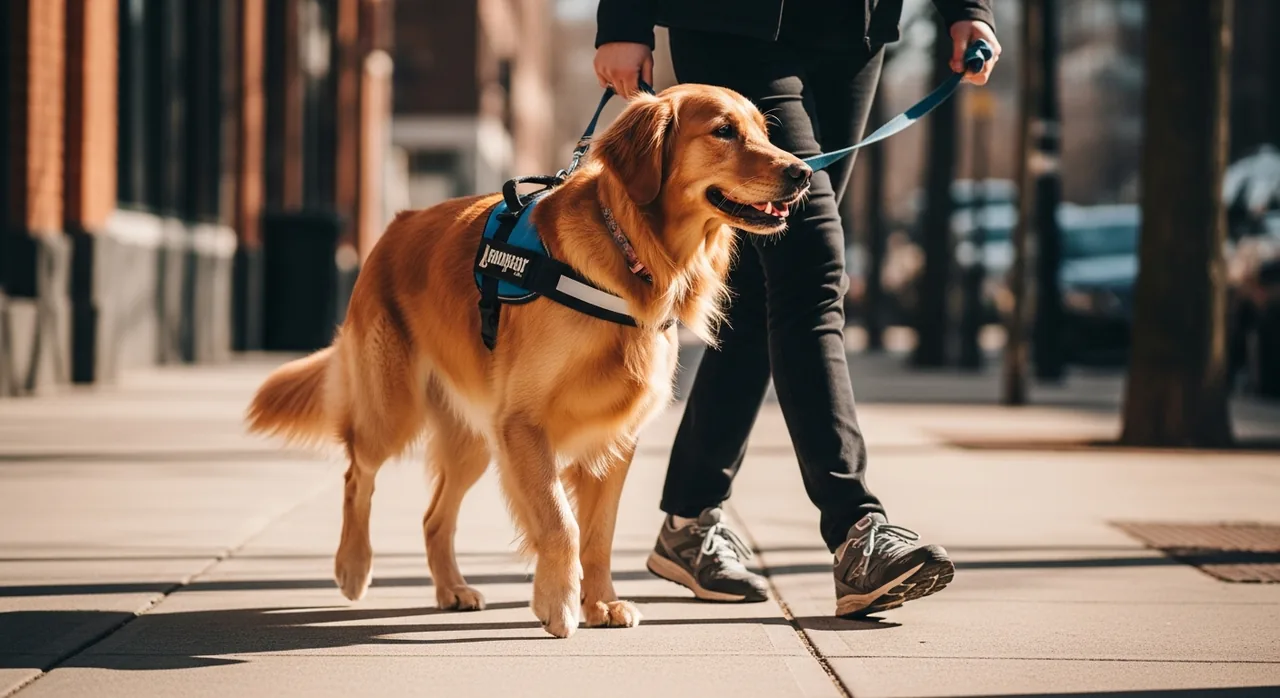
Walk into any major service dog program's kennel and you'll see the same two coats over and over: black-and-yellow Labradors and golden retrievers. That's not sentimentality. Goldens have spent decades earning their place among the top service breeds because the traits the job demands — steadiness, biddability, a genuine desire to work with a person — are the same traits ethical golden breeders have selected for since the breed existed.
This guide covers what golden service dogs actually do, what the law does and doesn't guarantee, and the honest numbers on training time, washout rates, and cost.
Why Goldens Suit Service Work
Three things make the breed a natural fit. First, temperament: a well-bred golden is people-oriented without being clingy, confident without being pushy, and famously tolerant of the noise and chaos of public spaces. Second, size: at 55–75 pounds, a golden is large enough for light mobility work — bracing, retrieving, opening doors — while still fitting under a restaurant table or an airplane seat footwell. Third, biddability: goldens want to be told what to do and then praised for doing it, which makes the thousands of repetitions in task training far easier than with more independent breeds.
The flip side is real: goldens shed heavily, mature slowly (expect puppy brain until age two), and their soft temperament means harsh training methods backfire badly. A golden service prospect also needs its energy managed — a dog that hasn't had its exercise needs met cannot lie quietly through a three-hour meeting.
Common Service Roles: Guide, Mobility, Medical Alert, Psychiatric
Goldens work across nearly every service specialty:
- Guide work for handlers who are blind or low-vision — goldens and golden-Lab crosses are staples at the major guide dog schools.
- Mobility assistance: retrieving dropped items, opening doors and drawers, pulling laundry, providing counterbalance on stairs.
- Medical alert and response: detecting blood-sugar changes or oncoming seizures, fetching medication, activating an alert button.
- Psychiatric service work: interrupting panic attacks or self-harm behaviors, performing deep-pressure therapy, guiding a dissociating handler to an exit. These are trained tasks — which is what separates a psychiatric service dog from an emotional support animal.
That last distinction trips up more owners than any other, and it has major legal consequences. If you're weighing which role fits your situation, our side-by-side breakdown of service dogs versus emotional support animals walks through the differences in detail.
What the ADA Actually Says
Under the Americans with Disabilities Act, a service animal is a dog individually trained to perform tasks directly related to a person's disability. Two points from the ADA service animal requirements matter most:
Public access is broad. A trained service dog may accompany its handler in restaurants, stores, hotels, hospitals, and virtually anywhere the public goes — even where pets are banned. Staff may ask only two questions: is the dog required because of a disability, and what task has it been trained to perform. They may not demand documentation, require a demonstration, or ask about the handler's diagnosis.
Comfort alone doesn't qualify. A dog whose presence soothes anxiety but performs no trained task is not a service animal under the ADA, no matter how well-behaved. Emotional support animals have separate, narrower protections that apply to housing — not public access.
No registration exists. The ADA requires no certification, ID card, vest, or registry — and no legitimate government registry of service dogs exists. Websites selling "official service dog certification" are selling paper with no legal meaning. A vest is a courtesy signal, not a credential.

Program Dogs vs. Owner-Training
There are two routes to a working golden. Program dogs come from organizations that breed, raise, and train dogs for two years before matching them with handlers. Quality is high and the dog arrives fully trained, but waitlists run one to five years, and while some nonprofits place dogs at no cost, others charge substantial program fees.
Owner-training is fully legal under the ADA — nothing requires a professional program. The realistic path starts with a carefully selected puppy from health-tested, temperament-sound lines, then eighteen to twenty-four months of socialization, obedience, public access work, and task training, usually with a private trainer's guidance. The AKC's service dog training overview is a sensible starting map. Everything you do in the first year matters enormously; our first-year puppy guide covers the socialization foundation that service prospects need even more than pet puppies do.
Timeline and Washout Rates
Plan on roughly two years from eight-week-old puppy to reliable working dog — about 120 hours of formal training at minimum, with most programs logging far more, plus daily informal work. And be honest with yourself about washout: even in professional programs that control breeding, raising, and training, roughly half of all candidate dogs don't make the cut, released for temperament quirks, health findings like hip dysplasia, or simple lack of work drive. For owner-trainers picking a single puppy, the odds are no better. A washed-out golden makes a wonderful pet — but if the service work is essential, you need a plan B before you start.
Cost and Funding Options
A program-trained golden typically represents $20,000–$50,000 in real costs, whether you pay it directly or a nonprofit's donors cover it. Owner-training runs $5,000–$15,000 once you count a well-bred puppy, professional training support, gear, and vet care — spread over two years, with no guarantee the dog succeeds. Funding help exists: disability-specific nonprofits, veteran-service organizations, state vocational rehabilitation agencies, and community fundraising all routinely contribute. Health insurance generally does not.
The Bottom Line
Goldens excel at service work for the same reason they excel as family dogs: they are stable, willing, and devoted partners. But a service dog is a medical tool built through two years of disciplined training, not a purchase. Start with the right dog, expect setbacks, ignore anyone selling certificates, and get help from a trainer who has actually finished service dogs before.