Golden Retriever Shedding: Seasons, Causes & Control That Works
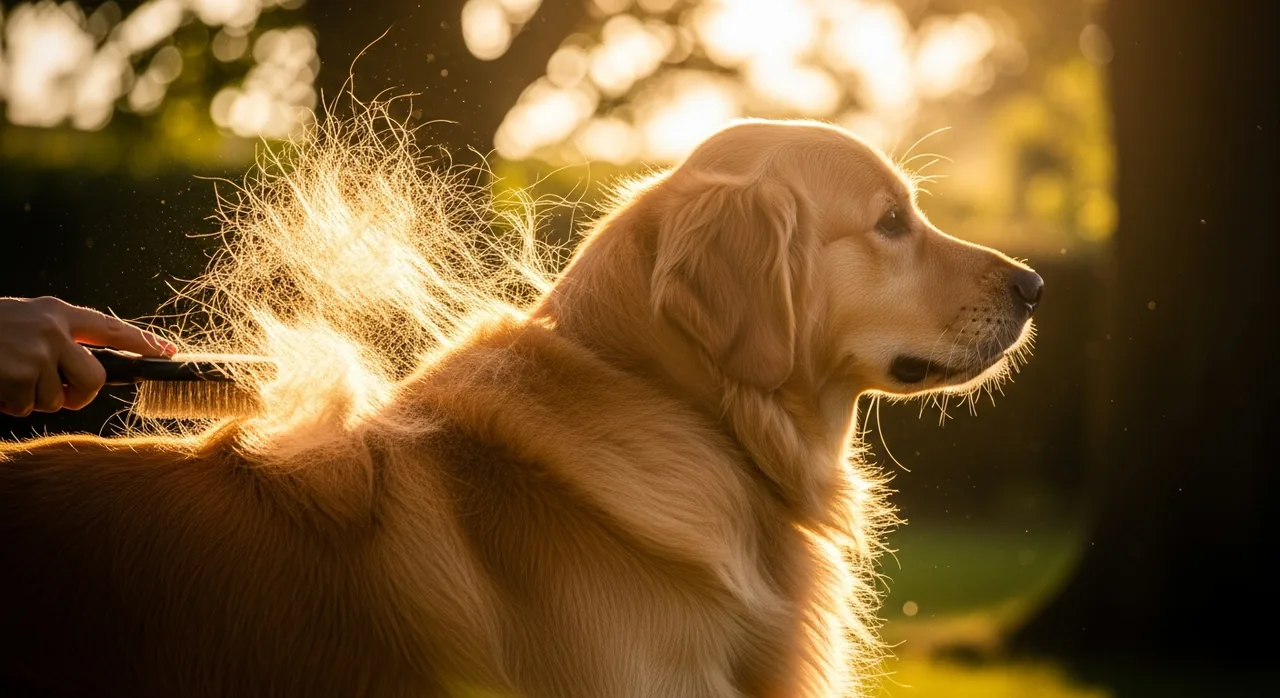
Let's settle the question first: yes, this is normal. The tumbleweeds under the couch, the golden halo on every black garment you own, the hair in food you prepared in a different room — all of it comes standard with the breed. Golden retrievers shed moderately every day of the year and torrentially twice a year, and no food, supplement, or miracle brush changes that basic fact. What a good routine can do is intercept most of that hair before it leaves the dog. Owners who brush on a schedule report the difference is dramatic — the hair still sheds, but into a brush instead of onto your floor.
The Double Coat, Explained
Goldens wear two coats. The outer coat is longer, water-repellent guard hair — the shiny gold you see. Beneath it lies a dense, soft undercoat that insulates against both cold and heat. The undercoat is where the volume lives: it grows and releases in cycles, and because there's so much of it, a golden drops more hair in a week than a short-coated breed drops in a month. This double coat is also functional equipment, which matters later when we get to shaving.
Coat Blow: The Twice-Yearly Event
Every spring and fall, the undercoat turns over more or less at once — owners call it "blowing coat." For two to four weeks, hair comes out in tufts you can pull free by the handful, and daily brushing goes from ideal to genuinely necessary. Spring is usually the heavier blow (dumping the winter undercoat), fall the lighter one. Indoor dogs living under artificial light and climate control often blow less dramatically but shed more evenly year-round. Nothing about a coat blow is a health concern as long as the coat underneath looks healthy and no bare patches appear.
The Weekly Routine That Cuts Loose Hair ~80%
Here's the maintenance schedule that keeps most golden households sane:
- Brush 2–3 times a week, 10 minutes a session — undercoat rake first in long strokes with the coat's grain, then a slicker brush to lift what the rake loosened. Feathering (tail, britches, behind the ears) gets a comb to catch mats early.
- During coat blow: brush daily, outdoors if you value your vacuum.
- Bathe monthly-ish with a dog shampoo, and brush before the bath (water sets mats) and again after drying — a bath during a coat blow releases a spectacular amount of ready-to-drop undercoat.
- Dry thoroughly. A damp undercoat invites hot spots. A dog dryer or patient toweling both work.
The full grooming picture — nails, ears, sanitary trims, and technique — is in our complete guide to golden retriever grooming.
Tools Ranked: What's Actually Worth Buying
| Tool | Best for | Verdict |
|---|---|---|
| Undercoat rake | Pulling loose undercoat in volume | Buy first. The workhorse for this breed; removes the most hair per minute of any tool. |
| Slicker brush | Surface hair, finishing, light detangling | Buy second. Pairs with the rake; not enough alone for a double coat. |
| Steel comb | Feathering, behind ears, mat patrol | Cheap and essential for the long bits. |
| Blade-style deshedder (Furminator type) | Aggressive undercoat removal | Use sparingly if at all — the blade can cut healthy guard hair and irritate skin when overused. The rake does the job more gently. |
| De-shedding blower/dryer | Coat-blow season | Luxury pick; blasts out undercoat impressively but costs and startles accordingly. |
Diet and Coat Quality
Coat is built from protein and fat, so nutrition shows up in the fur before almost anywhere else. A golden on a complete, high-quality diet with adequate omega-3 fatty acids typically carries a glossier coat and, many owners find, sheds somewhat less loose, brittle hair. No diet stops shedding — be skeptical of anything marketed that way — but a dull, greasy, or flaky coat is a legitimate reason to review what's in the bowl. Our golden retriever food guide covers what to look for; ask your vet before adding fish-oil supplements, since dosing matters.
When Shedding Signals a Problem
Normal shedding is even, leaves healthy coat behind, and doesn't change the skin. See your veterinarian when you notice:
- Bald patches or thinning that expose skin — especially symmetrical thinning on the flanks and tail, a classic pattern of hypothyroidism, which is relatively common in goldens
- Red, flaky, dark, or odorous skin under the coat — possible infection, allergy, or parasites
- Constant scratching, licking, or chewing accompanying the hair loss
- A sudden change in shedding pattern outside the normal spring/fall blows
- A dull, greasy, or brittle coat that persists despite good food and grooming
VCA's veterinary guide to hair loss in dogs is a solid overview of the medical causes, but pattern-matching from articles isn't diagnosis — skin and coat problems genuinely need eyes, and sometimes skin scrapes and bloodwork, from your vet. Several of the breed's underlying conditions show up first in the coat; our rundown of common golden retriever health issues explains which.
Never Shave a Golden
However hot the summer, don't shave the coat. The double coat insulates against heat as well as cold, sheds sun, and protects skin. Shaving removes that protection, raises sunburn and hot-spot risk, and the coat may regrow patchy, fuzzy, or permanently altered. If summer heat worries you, brush the undercoat out thoroughly, provide shade and water, and exercise in cooler hours — a well-raked golden manages heat better than a shaved one.
The Bottom Line
Shedding is the golden tax, paid daily and audited twice a year. Pay it with an undercoat rake three times a week, a monthly bath, decent food, and a good vacuum — and treat any change in the skin underneath as a vet question, not a grooming one. The hair, you learn to live with. Golden owners have been finding it in their coffee for a hundred years and signing up again anyway.