Best Dog Food for Golden Retrievers: A Vet-Informed Buying Guide

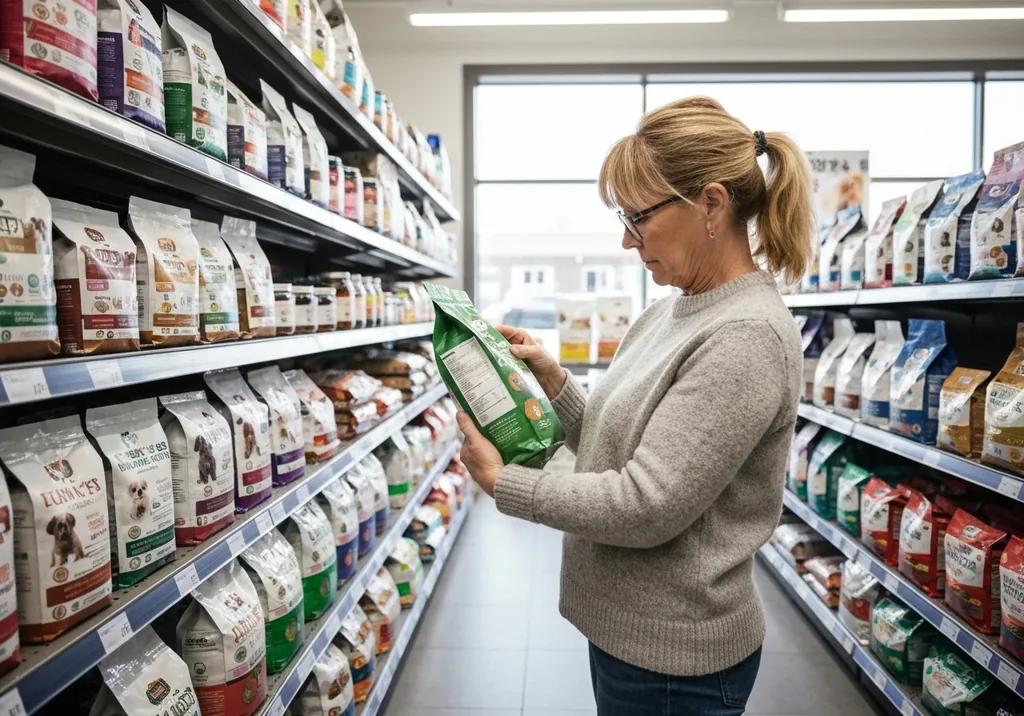
You will not find a brand ranking on this page — and that's deliberate. Formulas get reformulated, recalls happen, and the "best" food for a golden with a sensitive stomach isn't the best food for a working field dog. What doesn't change are the criteria on the label. Learn to read those, and you can evaluate any bag in the store aisle in about ninety seconds, this year and every year after.
Here's what a golden retriever actually needs from a food, how to verify a bag delivers it, and where the marketing ends and the nutrition starts.
What Goldens Specifically Need
Three breed traits should drive your label reading:
- Joints. Goldens are a large, fast-growing breed with well-documented rates of hip and elbow dysplasia. Controlled calcium and calorie levels during growth, and lean body weight for life, matter more for their joints than any supplement.
- Coat and skin. That double coat is built from protein and fat. Foods with named animal proteins and a meaningful omega-3 source (fish oil, fish meal, flaxseed) support coat shine and calmer skin. Look for both omega-6 and omega-3 listed in the guaranteed analysis — many coat-focused formulas target a roughly 5:1 to 10:1 omega-6 to omega-3 balance.
- Calories. Goldens are famously food-motivated and famously prone to obesity, and extra weight is one of the biggest controllable drags on the breed's lifespan. Moderate calorie density plus measured portions beats any "diet" formula.
Reading an AAFCO Statement
Flip the bag over and find the small print that begins "This food is formulated to meet..." or "Animal feeding tests using AAFCO procedures...". That nutritional adequacy statement is the single most informative sentence on the package. It tells you two things: whether the food is complete and balanced, and for which life stage — growth, adult maintenance, or all life stages.
Two details to check: a feeding-trial statement ("animal feeding tests") is a stronger claim than a formulation statement ("formulated to meet"), and for a golden puppy the statement must say growth "including growth of large size dogs (70 lb or more as an adult)". The WSAVA global nutrition guidelines go further, recommending you also weigh whether the manufacturer employs qualified nutritionists, runs feeding trials, and does its own quality-control testing — questions any reputable company will answer.
Large-Breed Formulas: Why They Matter
For puppies, "large breed" on the label is not marketing — it reflects real formulation differences. Large-breed growth formulas cap calcium and calorie density so a golden puppy grows at a controlled rate. Puppies that grow too fast on calcium-rich or energy-dense food carry a higher risk of developmental joint problems, and in a breed already loaded with dysplasia genetics, growth rate is one of the few levers you control. Feed a large-breed puppy formula until roughly 12–18 months, and pair it with the portion guidance in our golden retriever puppy feeding schedule.
For adults, large-breed formulas are less critical but often sensible: they tend toward moderate calories and include joint-supportive nutrient profiles suited to a 65–75 lb frame.
Puppy vs Adult vs Senior Formulas
Match the AAFCO life stage to the dog in front of you. Large-breed puppy formula through the growth phase; adult maintenance from about 12–18 months; and around age seven or eight, a conversation with your vet about senior formulas, which typically dial calories down and sometimes add joint support. "All life stages" foods are legitimate but are formulated to puppy standards, meaning they're calorie-rich — a common cause of quietly gaining adult goldens.
The Grain-Free Question (and the DCM Investigation)
In 2018 the FDA opened an investigation into a potential link between certain diets and canine dilated cardiomyopathy (DCM), a serious heart condition, after case reports in dogs eating grain-free foods heavy in peas, lentils, and other legumes. The science remains unsettled: the FDA has not established a causal relationship, and it stopped issuing routine updates after noting that reports alone couldn't untangle diet from other factors. Golden retrievers were among the breeds appearing in the case reports, which is reason for measured attention rather than alarm.
The practical takeaway most veterinarians give: goldens have no medical need for grain-free food unless a vet has diagnosed a specific allergy (which is rare, and more often to a protein than a grain). If you're unsure, this is exactly the question to bring to your own veterinarian, who knows your dog's heart, history, and diet.
Feeding Amounts & Body Condition
The feeding chart on the bag is a starting range calibrated for active dogs; most pet goldens need 10–20% less. The real gauge is body condition, not the measuring cup: you should feel ribs easily under a light fat layer and see a visible waist from above. Weigh the food — eyeballed scoops drift upward — and count treats inside the daily calorie budget, not on top of it. Track your dog against our golden retriever weight chart, and let your vet score body condition at every visit.
The rib test beats the bag chart. If you can't feel ribs with flat fingers and gentle pressure, reduce portions by about 10% and re-check in three weeks. Keeping a golden lean is the single most evidence-backed thing an owner controls for joint health and longevity — worth more than any premium ingredient list.
Budget vs Premium: Where the Line Actually Is
Price correlates loosely with quality, and the middle of the market is where most goldens should eat. Below a certain price point, corners get cut in ways the label reveals: vague protein sources ("meat meal"), no feeding-trial statement, no large-breed option. Above the mid-range, you're increasingly paying for marketing — exotic proteins, "ancestral" branding, boutique formulas that may lack the feeding-trial history of mainstream research-backed brands. A mid-priced food from a manufacturer that meets the WSAVA questions above, fed in correct portions, will outperform an expensive food fed carelessly. Food is also a recurring line in a 12-year budget — see our lifetime cost of owning a golden retriever for how it stacks against everything else.
The Bottom Line
Ignore the front of the bag. Check the AAFCO statement for the right life stage (large-breed growth for puppies), confirm named proteins and an omega-3 source, choose a manufacturer that does real nutrition research, and feed to a lean body condition. Any food that clears those bars is a defensible choice — and your veterinarian, who can see your actual dog, is the right tiebreaker between the finalists.