Golden Retriever Size Guide: Height, Weight & Build
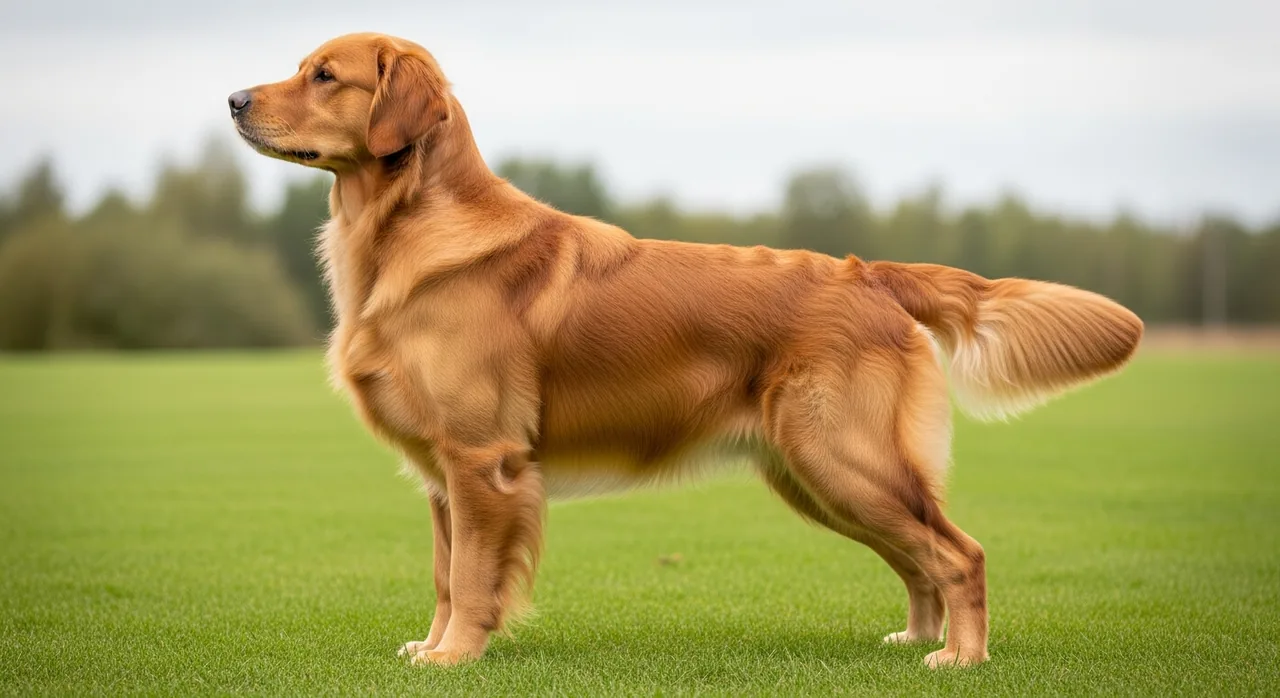
How big does a golden retriever get? Big enough to occupy an entire couch, small enough to believe it fits on your lap. In actual numbers: a male finishes around 23–24 inches at the shoulder and 65–75 pounds; a female runs 21.5–22.5 inches and 55–65 pounds. But those tidy figures hide a surprising amount of variation — between the sexes, between field and show bloodlines, and between an eight-month-old that looks full-grown and the genuinely finished dog it becomes a year later.
Here's the complete size picture, including the practical part most guides skip: what those dimensions mean when you're buying crates, harnesses, and cars.
The Official Breed Standard
The AKC breed standard defines the golden retriever as a medium-large sporting dog:
| Height (at withers) | Weight | |
|---|---|---|
| Males | 23 – 24 inches | 65 – 75 lbs |
| Females | 21.5 – 22.5 inches | 55 – 65 lbs |
The standard also calls for balanced proportions — body length slightly greater than height, deep chest, level topline. Height is measured at the withers (the ridge between the shoulder blades), not the head, which is why your "25-inch" golden may actually be a standard 23. The Golden Retriever Club of America's breed information is the best deep-dive if you want the full standard with commentary.
Male vs. Female: A Real but Modest Gap
The difference between the sexes is roughly an inch and a half of height and ten pounds of weight, but the visual difference is often larger than the numbers suggest. Males carry blockier heads, heavier bone, and fuller coats and ruffs; females are typically more refined through the head and frame. Functionally, for a pet home, the gap is minor — a female golden is still a strong, substantial dog that can pull a leash and clear a coffee table with her tail. For tracking your own dog's numbers against the norms month by month, use our golden retriever weight chart.
Field vs. Show Build
Within the same standard live two noticeably different dogs. Field-bred goldens (from hunting and trial lines) tend toward the smaller, lighter end: leaner frames, less coat, more angulation, built for a day of work. Show or conformation-bred goldens run heavier-boned and fuller-coated, often at the top of the height and weight ranges, with the blocky head most people picture when they hear "golden retriever." Neither is more correct — but if you have a size preference, ask about the breeder's lines before you're on a waitlist, because a 55-pound field female and a 78-pound show male are legitimately different dogs to live with.

When Do Goldens Stop Growing?
Height finishes first: most goldens reach their full shoulder height between 9 and 12 months. Weight and substance take longer — chest depth, muscle, and that mature "filled out" look keep developing until 18 to 24 months, with males typically finishing later than females. So a lanky 11-month-old at 60 pounds isn't underweight; he's an adolescent whose frame arrived before the rest of him. The stage-by-stage detail, from newborn through adult, is covered in our guide to golden retriever growth stages.
Sizing Gear: Crates, Harnesses, and Doors
Practical translations of the standard:
- Crate: 42-inch (XL) is the standard adult golden crate — roughly 42"L × 28"W × 31"H. Buy it once, with a divider panel for the puppy months, rather than buying three crates in a year.
- Harness: most adult goldens wear size Large, with girth around 27–32 inches. Measure the chest just behind the front legs; between sizes, size up for coat.
- Collar: typically 18–24 inches depending on sex and coat.
- Dog door: a "large" flap of roughly 10" × 15" or bigger; measure your dog's shoulder height and width rather than trusting the label.
- Car: an adult golden needs genuine cargo or back-seat space — figure a footprint of about 40" × 24" lying down. Hatchbacks work; coupes get hairy, literally.
Buying gear for a puppy? Buy the adult crate with a divider on day one, but wait on the harness — you'll pass through two or three sizes before the adult Large fits. Cheap interim harnesses beat outgrown expensive ones.
Is My Golden Too Small — or Too Large?
An adult golden a bit outside the standard ranges is usually just genetics: field lines run small, some show lines run big, and mixed ancestry stretches the range further. The standard exists for the show ring, not the vet clinic. That said, a few situations are worth a professional opinion rather than internet reassurance:
- An adult dramatically under range (below ~50 lbs) with a thin coat, low energy, or poor appetite
- A puppy whose growth stalls or drops off its curve for several weeks
- An adult over range whose ribs you can't feel — in goldens, "big-boned" is usually a euphemism, and excess weight carries real health consequences
- Any sudden change in weight without a change in feeding
Your veterinarian can score body condition properly and rule out medical causes like thyroid issues, which show up in this breed often enough to check. Bring your written weight history — it turns a guess into a diagnosis-quality data point.
The Bottom Line
Expect 23–24 inches and 65–75 pounds from a male, a touch less from a female, with field lines lighter and show lines heavier. Height finishes around a year, substance around two. Buy the 42-inch crate, the size-Large harness, and a good vacuum — and judge your dog's size by body condition and its own growth curve, not the neighbor's golden.